
Pet Diagnostic Imaging in San Tan Valley, AZ
At Johnson Ranch Animal Clinic, we know how difficult it can be when your pet is acting differently and you are not sure why. Because pets cannot tell us exactly where they hurt or what they are feeling, accurate testing plays an important role in getting answers. Our diagnostic imaging in San Tan Valley, AZ help us look beyond visible symptoms and gather the information needed to understand what may be going on. By combining careful physical exams, modern diagnostic equipment, and laboratory testing, we can make more informed decisions about your pet’s care.
Why Veterinary Diagnostics Matter
Many health problems can look similar on the surface. A pet that is tired, not eating, limping, coughing, vomiting, or losing weight may have several possible causes, and symptoms alone do not always tell us enough.
That is where diagnostics become especially valuable. Testing can help us narrow down possibilities, identify patterns, and determine whether a condition involves the bones, organs, blood, skin, urinary system, or another part of the body.
We use diagnostic information together with your pet’s history and physical exam findings. The goal is not to run tests without reason, but to choose the tools that are most likely to help us understand the problem.
Pet X-Rays for a Closer Look Inside the Body
X-rays are one of the most useful imaging tools in veterinary medicine because they allow us to evaluate structures that cannot be seen during a routine exam. San Tan Valley pet x-rays may be recommended when we need to assess bones, joints, the chest, the abdomen, or certain internal changes.
X-rays can be helpful when we are investigating concerns such as:
- Limping or suspected fractures
- Joint or orthopedic problems
- Coughing or breathing changes
- Abdominal discomfort
- Possible foreign objects
- Changes in organ size or position
- Pre-surgical concerns
- Other symptoms that need a closer internal look
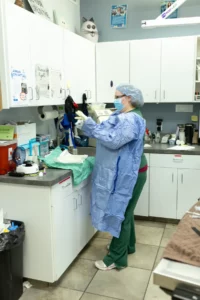
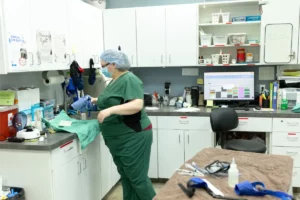
Our certified veterinary technicians help position pets carefully and obtain diagnostic images as safely and efficiently as possible. We understand that some pets are nervous, painful, or uncomfortable, so we work to make the process as calm as we can.
San Tan Valley Pet Imaging Supports Better Decisions
Imaging gives us another layer of information when a physical exam is not enough. It can help us identify structural changes, compare areas of concern, and determine whether additional testing may be appropriate.
The results from San Tan Valley pet imaging are interpreted alongside your pet’s symptoms, medical history, and other test findings. That broader approach helps us avoid treating one result in isolation and gives us a clearer overall picture.
Sometimes imaging provides the answer right away, while other times it points us toward the next step. Either way, it helps us make more targeted recommendations instead of relying on guesswork.
Blood Tests and Laboratory Diagnostics
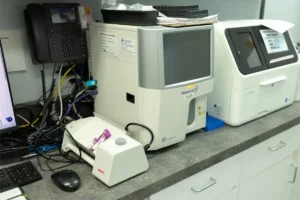
Bloodwork can reveal important information about organ function, infection, inflammation, anemia, immune response, and many other conditions. Depending on what your pet is experiencing, blood tests may be used during a wellness visit, before surgery, or while investigating a specific illness.
We also use both on-site diagnostic resources and off-site commercial laboratories when appropriate. This allows us to perform a wide range of tests based on the type of information we need.
Common laboratory diagnostics may include:
- Complete blood tests
- Pre-surgery bloodwork
- Hormone evaluations
- Heartworm testing
- Valley Fever testing
- FeLV/FIV testing for cats
- Other targeted laboratory evaluations
The value of bloodwork is that it can reveal problems that may not be obvious during a physical exam. It can also help us monitor pets with ongoing health conditions or evaluate how they are responding to treatment.
Urinalysis, Stool Testing, and Other Important Tests
Some of the most useful diagnostic information comes from samples that are relatively simple to collect. Urinalysis can help us evaluate urinary tract concerns, kidney-related changes, hydration, and other health issues.
Stool testing can help identify intestinal parasites, while skin testing and cultures may help us investigate itching, infections, hair loss, or recurring skin problems. These tests can be especially helpful when symptoms have several possible causes.
Our diagnostic capabilities also include:
- Skin diagnostics
- Fungal cultures
- Bacterial culture and sensitivity
- Needle aspirates
- Biopsies
- Eye testing
- Glaucoma testing
- EKGs
Each test answers a different question, which is why we choose diagnostics based on what we are seeing in the individual patient. We want every test to have a clear purpose within the larger evaluation.
Testing for Valley Fever and Regional Health Concerns
Living in Arizona means we also pay close attention to regional diseases such as Valley Fever. Dogs in particular can be exposed to fungal spores in desert soil, and symptoms may include coughing, lethargy, weight loss, limping, or other changes.
Valley Fever testing is one of the diagnostic services we provide when symptoms and history suggest it may be a possibility. Because no single test tells the full story in every patient, we may combine bloodwork, imaging, physical exam findings, and clinical response when evaluating suspected cases.
That local experience matters because the diseases we see in San Tan Valley are influenced by the desert environment. We take those regional realities into account when deciding what to investigate.
Diagnostics Before Surgery
Pre-surgery testing helps us understand more about a pet’s health before anesthesia and a procedure. Bloodwork can help us assess organ function and identify concerns that may affect how we plan anesthesia, medication, or recovery.
Depending on the surgery and patient, imaging or other diagnostics may also be recommended. The purpose is to gather enough information to make the procedure as well planned and appropriate as possible.
We believe good surgical care starts before the procedure itself. Diagnostic preparation helps us make decisions based on the individual patient rather than assuming every pet has the same risk profile.
Frequently Asked Questions
X-rays may be recommended for limping, suspected fractures, coughing, breathing changes, abdominal concerns, or possible internal abnormalities. Your veterinarian will decide whether imaging is appropriate based on your pet’s symptoms and exam.
The x-ray itself is not painful, but positioning can be uncomfortable if a pet has an injury or sore area. Our team works carefully to minimize stress and may discuss additional support if needed.
We use both on-site diagnostic resources and off-site commercial laboratories depending on the test. This gives us flexibility to choose the right option for the type of information we need.
Yes, Valley Fever testing is one of the services we provide when the symptoms and history support it. Bloodwork, imaging, and other clinical findings may also be important in making a diagnosis.
Some conditions require more than one type of testing. We may recommend additional bloodwork, imaging, cultures, biopsies, or other diagnostics depending on what the first results show.
Get Clearer Answers About Your Pet’s Health
At Johnson Ranch Animal Clinic, we know uncertainty is one of the hardest parts of caring for a sick or uncomfortable pet. That’s why our diagnostic and imaging services are designed to give us more complete information so we can understand what is happening and recommend the next step with greater confidence. From pet x-rays and laboratory testing to Valley Fever screening, cultures, and advanced evaluations, we use each tool with a specific purpose in mind. So contact our team today if your pet is showing new symptoms or needs diagnostic testing, and we will help you work toward clearer answers.